QuantRate Launches Free AI Trading Platform for Stocks, Crypto, and Forex
QuantRate is pitching a free AI trading platform across stocks, crypto, and forex. The stated stack is multi-layer machine learning, real-time market analytics, signal generation, cross-asset risk assessment, and algorithmic strategy recommendations.
Kyle Donnelly, Algorithmic Trader & Market Technician·updated June 30, 2026
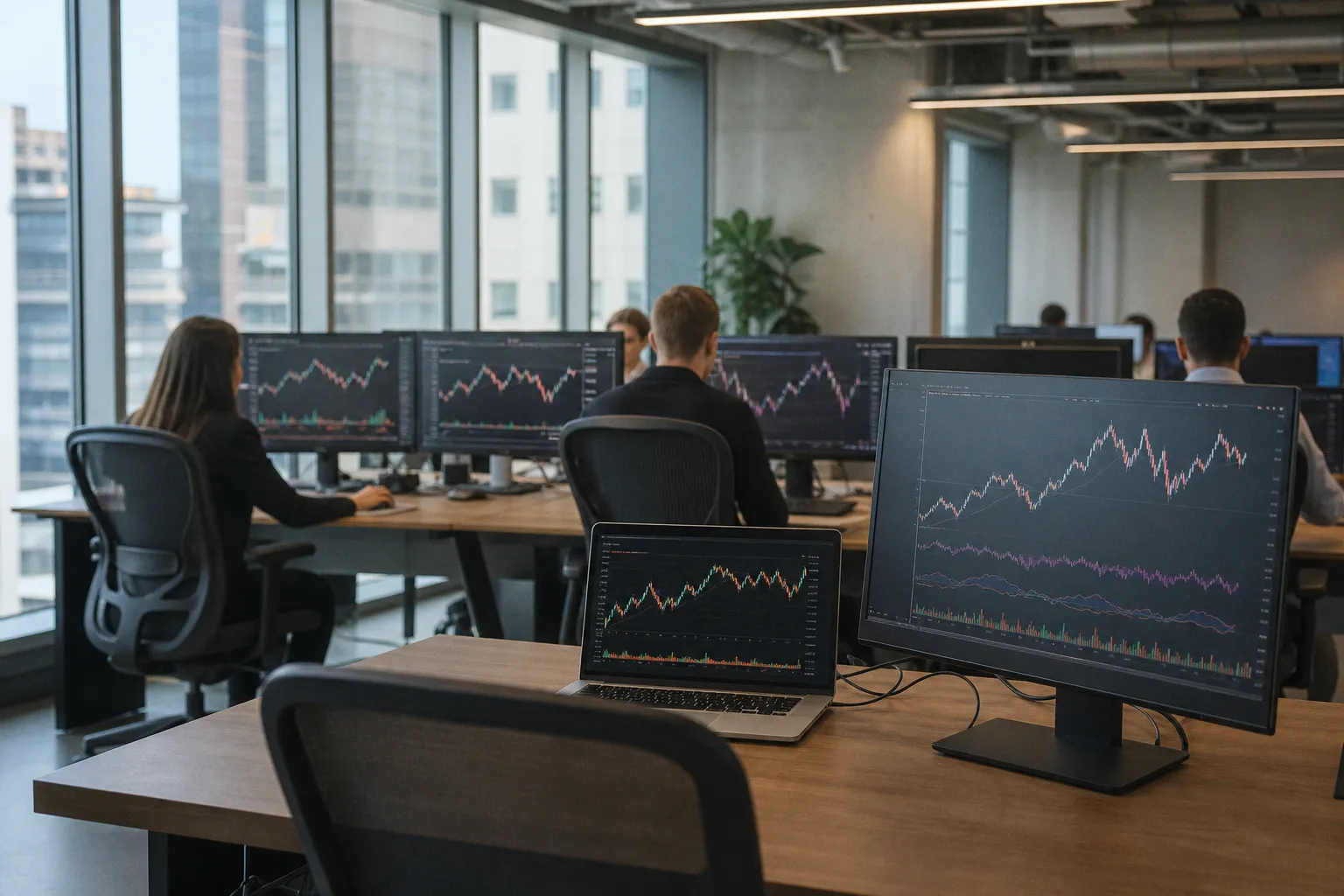
Free signals are not free edge
QuantRate says the platform is designed for both retail and professional investors worldwide, with AI models scanning markets and helping users identify potential trading opportunities. The company frames it as an “enhanced decision intelligence system,” not a replacement for traders.
That distinction matters. A signal engine is not a strategy. A recommendation is not a tested execution model. If the platform gives entries, risk context, or strategy suggestions, the first question is not whether the interface looks institutional. The first question is whether the output survives out-of-sample testing after fees, slippage, latency, and regime change.
I am allergic to “institutional-grade analytics” language unless the methodology is inspectable. Multi-layer machine learning can mean useful feature extraction. It can also mean an opaque classifier trained on noisy market states with a beautiful dashboard sitting on top. The market does not pay for model complexity. It pays for persistent edge.
Cross-asset coverage raises the bar
The launch covers stocks, cryptocurrencies, and forex under a unified analytical framework. QuantRate also says the system includes real-time data analysis, automated strategy engines, and cross-market adaptability.
That sounds useful in theory. In practice, these markets do not share the same microstructure. Crypto trades continuously. Forex has its own session behavior and liquidity profile. Stocks carry gaps, earnings effects, and exchange-specific mechanics. A model that treats these as interchangeable price streams can produce clean-looking signals with dirty assumptions underneath.
For systematic traders, the practical checklist is simple. Does the platform separate signal logic by asset class? Does it show historical performance by regime? Does it disclose whether recommendations are trend-following, mean-reversion, volatility-based, or some blended ensemble? Does it provide enough raw data to validate the signal, or only a confidence score?
A confidence score without calibration is noise wearing a badge.
The AI trading cycle is getting crowded
The company’s announcement points to a broader fintech push around AI-driven trading tools. It cites industry data projecting the algorithmic trading and AI trading systems market to exceed $54 billion in 2026, with expected compound annual growth above 14% in the coming decade. It also cites 2026 market data saying more than 42% of active traders already use some form of AI-assisted tool to reduce emotional decision-making and improve execution efficiency.
Those numbers explain the product timing. They do not validate the signals.
For readers here, the correct response is neither hype nor dismissal. A free AI platform can be useful as a screening layer, especially if it helps compress research time across multiple markets. But I would not route capital from a black-box recommendation until I can measure sample size, false positives, drawdown distribution, and performance decay.
The thing to watch is not whether QuantRate can generate signals. Any model can generate signals. The thing to watch is whether traders can audit them, test them, and reject them when the math breaks. That is where tools become infrastructure — or just another indicator stack with better branding.