Kyle Donnelly, Algorithmic Trader & Market Technician
July 20, 2026 · 12 min read
Free trading signals: the catch behind zero-cost alerts
A signal can be profitable on the provider’s chart and untradeable in your account.
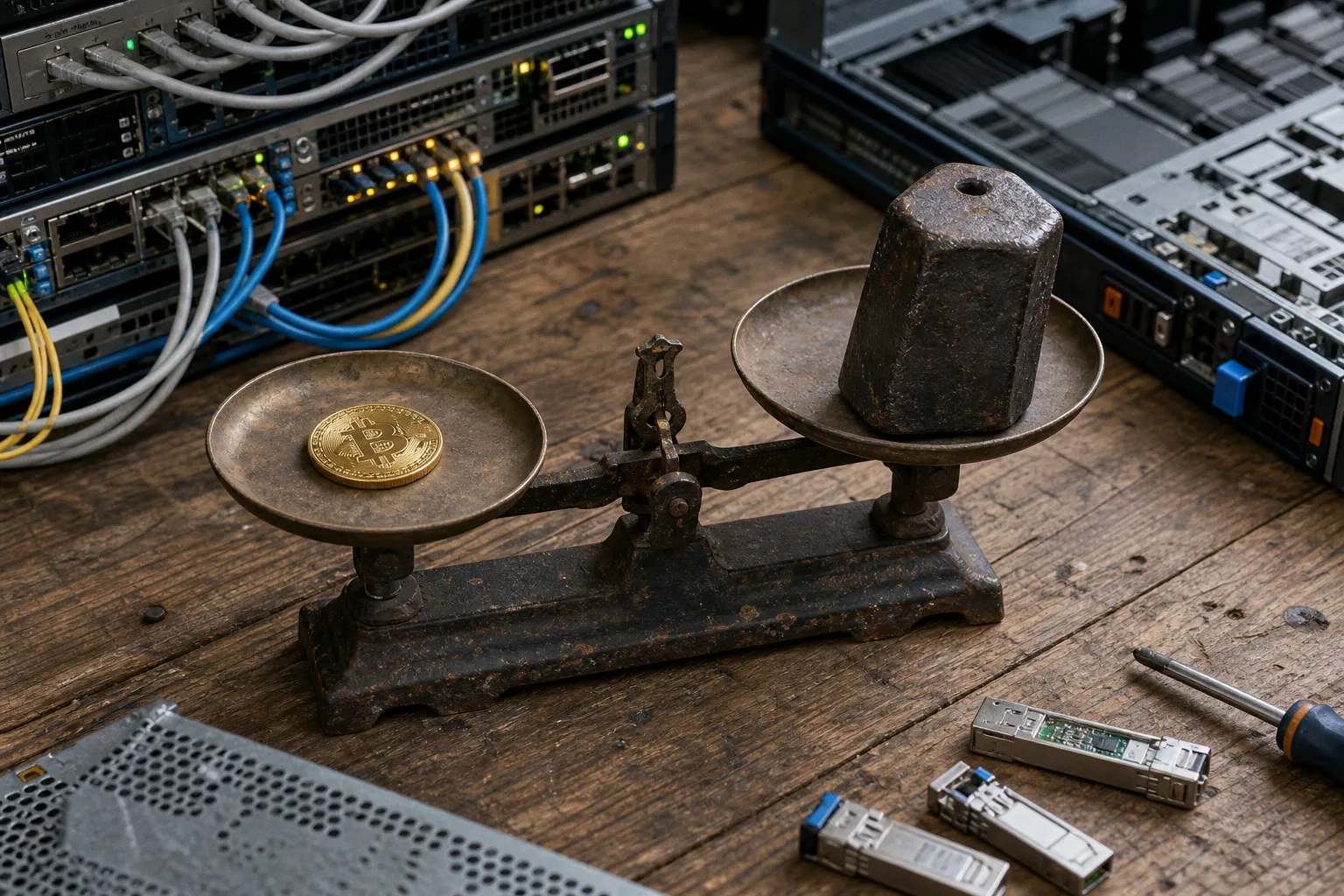
I have seen this failure mode repeatedly in backtests and execution logs: a setup with a modest positive expectancy becomes negative after a wider spread, delayed fill, and arbitrary position sizing are applied.
That is the catch behind free trading signals. The alert itself is rarely the product. Your account, your turnover, and your broker registration often are.
The retail question is usually, “Do free trading signals work?” The better question is harsher: work for whom, under what execution conditions, and after which costs? Without those variables, a posted entry and an advertised win rate are noise dressed as a trading system.
The economics of “free” signals
Free buy and sell alerts are not automatically fraudulent. Some are educational samples. Some come from open communities. A few are generated by traders who genuinely publish their work. But “free” is not a business model. It is an acquisition mechanism.
The standard structure is simple. A Telegram channel, Discord server, or social account offers a stream of entries. The audience is directed toward a specific broker, often through a referral link. The provider can receive a one-time cost-per-acquisition payment reported in the range of $400 to $1,500 for a funded referral. Then comes the more durable revenue source: volume rebates, commonly measured per lot traded.
Reported affiliate rebates can run from roughly $5 to $15 per lot. That changes the incentive function.
A signal provider paid on trading volume does not necessarily benefit from a follower sitting flat, waiting for only high-conviction setups. More activity can mean more affiliate revenue. More trades also create more screenshots, more selective narratives, and more opportunities to claim that a channel is “active.”
This does not prove malice. It proves misaligned incentives.
I do not care whether a provider says they trade the alerts personally. I care whether their P&L is independently verifiable, whether every alert remains visible after the fact, and whether their revenue depends on my turnover rather than their strategy’s risk-adjusted return.
A free alert is not free if the business model requires you to trade more than your edge supports.
This is why “accurate free trading signals” is a bad search term. Accuracy is not expectancy. A strategy can win 85% of the time and still be structurally awful if its occasional loss is six or eight times the average win. Win rate is the easiest metric to market because it suppresses the only numbers that matter: average win, average loss, drawdown, slippage, and exposure time.
A provider posting “92% win rate this month” has told me almost nothing. I need to see:
- Every entry, stop, target, and cancellation timestamp—not just the final directional call.
- The instrument and account assumptions used for the result.
- Gross versus net performance after spread, commission, swaps, and slippage.
- Maximum adverse excursion and maximum drawdown.
- Position-sizing rules. A fixed 0.01 lot signal is not a risk model.
- A complete losing-trade record that cannot be deleted after the fact.
If that data does not exist, there is no strategy to evaluate. There is only content.
The latency trap: the trade begins before you receive the alert
Signal vendors like to show the chart level. Followers trade the timestamp. Those are not the same thing.
A provider may enter EUR/USD at a raw ECN spread near 0.0–0.1 pips, on a fast VPS, with a direct market-data feed. A follower may receive the notification after the move starts, open a mobile app, and enter through a standard account showing a 1.8-pip spread. The provider calls it a 4-pip win. The follower may begin the trade down 2 pips before price even moves.
That is not a small discrepancy. For short-horizon systems, it is the whole system.
One execution comparison put the difference bluntly: around 75 milliseconds of delay could produce slippage of up to -1.50 pips per trade, versus roughly +0.20 pips under sub-millisecond conditions. Treat the exact result as venue- and instrument-dependent, because it is. The directional lesson is still robust. Latency is a trading cost, not an inconvenience.
Let’s use a deliberately plain example.
| Parameter | Provider’s environment | Retail follower’s environment |
|---|---|---|
| Quoted spread | 0.1 pip | 1.8 pips |
| Entry delay | Near-instant | 75 ms or more |
| Slippage impact | Around +0.20 pips | Up to -1.50 pips |
| Total starting disadvantage | Minimal | Roughly 3 pips versus provider |
| Effect on a 5-pip target | Still viable | Edge may be erased |
A strategy targeting 40 pips can absorb a few pips of execution drag. A scalping signal targeting 3–8 pips cannot. Yet many free Telegram trading signals are built precisely around tight entries, short targets, and an implied assumption that thousands of followers can enter at the same price. They cannot.
Markets do not allocate fills democratically.
The first accounts to hit liquidity get one outcome. The last accounts to react get another. In fast conditions, the notification itself can become a liquidity event: followers all send market orders in the same direction, widening the gap between the provider’s screenshot and the audience’s fills.
I backtest signal logic with execution friction added before I call anything an edge. That means spread, commissions, realistic stop fills, and adverse slippage. If a strategy’s expectancy disappears when I add one pip of friction, it did not have a usable edge. It had a favorable simulation.
The retail-friendly entry is usually a myth
The most common signal format is also the least informative:
“BUY GOLD NOW
TP1: 2,345
TP2: 2,352
SL: 2,331”
It looks complete. It is not.
What does “now” mean? At the provider’s quote? At the follower’s quote? Is a market entry acceptable three dollars above the original level? Does the signal expire after one minute, ten minutes, or one candle close? Does the stop account for spread? Is TP1 a partial exit or a full close? Does moving the stop to breakeven after TP1 belong to the model, or is it improvised in the channel?
These details are not administrative. They determine the distribution of outcomes.
A trading signal needs to be executable as a rule set. If two followers can reasonably interpret it differently, it is not a signal. It is commentary.
The gap becomes wider when providers use raw-spread accounts while their audience uses standard retail accounts. A provider who buys at an institutional-style quote and reports their fill may not be lying. But the reported trade is irrelevant if the follower’s executable ask was materially higher.
This is particularly destructive in three setups:
1. Tight-stop mean-reversion trades. A 4-pip stop looks mathematically disciplined until a 1.8-pip spread and modest slippage consume most of the available room. The stop is then measuring account friction, not invalidation of the thesis.
2. Breakout entries around scheduled volatility. Spread expansion and thin liquidity turn “enter on confirmation” into an uncontrolled market order. The quoted entry is already historical by the time the alert lands.
3. Multi-target signals with no scaling protocol. Providers frequently celebrate TP1, while followers do not know whether to close 30%, 50%, or 100% of the position. The published win becomes impossible to reproduce.
The fix is not finding a more charismatic provider. The fix is demanding a model with explicit execution rules, then testing those rules on your own broker and account type.
If you cannot reproduce a signal from its timestamp, quote source, sizing rule, and exit logic, you cannot measure it.
Win rates are marketed; sample quality is hidden
Retail signal marketing has a predictable visual grammar: a few green checkmarks, screenshots of closed trades, a monthly win rate, and an oversized claim about consistency.
The claim is usually not independently audited. That matters more than the number itself.
A channel can remove losing alerts. It can publish a vague “watch sell zone” message, later present one favorable candle as a successful call, or count multiple targets as separate wins while treating one stopped trade as a single loss. It can also avoid publishing stop-loss levels altogether. In that case, a losing position remains “running” until the audience forgets it existed.
This is selection bias with a Telegram interface.
I am not arguing that every free channel manipulates results. I am saying the burden of proof belongs to the person selling the performance narrative, even if the price tag says zero. A public, timestamped feed is better than screenshots. A third-party verified statement is better than a public feed. A verified record still needs analysis, because verification does not solve the problem of copyability.
There is a further issue: sample size.
Twenty winning trades prove nothing. Fifty trades often prove little, especially in a market regime favorable to the strategy. A momentum system can look brilliant during a directional month and collapse when volatility compresses. A mean-reversion system can produce a beautiful equity curve until one trend event reveals a hidden negative skew.
When I evaluate a signal history, I want enough observations across distinct conditions:
- Trending and range-bound periods.
- High- and low-volatility sessions.
- Major news windows and ordinary liquidity.
- Different spread environments.
- Losing streaks, not merely aggregate return.
- A clear definition of what counts as a trade.
The advertised number is usually win rate. The diagnostic number is expectancy:
Expectancy = (win rate × average win) − (loss rate × average loss) − execution costs
Nothing mystical is happening here. A 90% win rate with an average win of 4 pips and an average loss of 50 pips has a fragile profile before costs. Add a wider spread and delayed entry, and the math gets worse quickly.
Why signal followers erode their accounts
Industry estimates commonly place the share of retail traders losing money while following third-party signals within six months somewhere around 70% to 91%. That range is broad, and I would not treat it as a universal law. But the mechanics behind it are obvious.
The failure is rarely one catastrophic bad alert. It is cumulative drag.
A follower takes every trade at the same lot size, regardless of stop distance. They increase size after a handful of winners. They skip stops when the provider says “hold.” They take a late entry after a notification delay. They close early because the signal is already underwater on their account. Then they double risk on the next trade to recover the previous loss.
At that point, the original strategy—if one existed—is gone. The follower is running an untested hybrid of someone else’s entries and their own stress response.
Position sizing is where free signals are most often unusable. “Buy 0.10 lots” is not risk management. A 0.10 lot position means radically different things in a $500 account, a $5,000 account, and a $50,000 account. It also means different things with a 10-pip stop versus a 100-pip stop.
A signal worth following should allow the trader to calculate risk before entry:
1. Define the account-level loss limit per trade as a percentage or fixed currency amount.
2. Use the actual stop distance, including a realistic allowance for spread and slippage.
3. Convert that risk into position size for the specific instrument.
4. Reduce or reject the trade if the required stop is unclear, too wide, or already compromised by a late fill.
5. Track results at your fills, not the provider’s claimed fills.
This is less exciting than copying a message and pressing buy. It is also the difference between a controlled drawdown and account erosion.
The regulatory issue is not theoretical
Regulators have repeatedly warned about unauthorized signal sellers and social-media financial promoters. The UK Financial Conduct Authority and South Africa’s Financial Sector Conduct Authority are among the bodies that have issued public warnings in this area.
Regulation does not certify profitability. An authorized provider can still run a weak strategy. An unregulated educator can still publish useful analysis. But a signal vendor handling money, making performance claims, pushing broker referrals, or presenting themselves as an adviser deserves a higher level of scrutiny.
The red flags are operational:
- The channel makes outsized profit claims but will not show a complete, independently verifiable record.
- Losing alerts disappear, are edited, or are reframed as “long-term holds.”
- Stops are optional, vague, or announced only after the market moves.
- The provider pressures followers to use one broker without explaining the commercial relationship.
- The strategy is described through conviction language rather than rules, data, and drawdown.
- The channel sells urgency: “enter now,” “no hesitation,” “guaranteed recovery.”
That last point matters. Urgency is useful for the provider because it bypasses analysis. It is destructive for the follower because it converts a trade into a reflex.
A signal is only useful after it survives your environment
I do not reject free trading signals because they are free. I reject unmeasurable signals because they are unmeasurable.
A good alert can be a research input. It can point me toward an instrument, a volatility event, or a setup worth testing. It can even be part of an execution workflow if the rules are explicit and the performance has survived realistic simulation. But I will not outsource position sizing, execution timing, and risk limits to a chat channel with a green-checkmark collage.
The market does not pay for confidence. It pays for a persistent edge after costs.
Before treating any free signal as actionable, run it through your own ledger for a meaningful sample. Record the provider’s timestamp, your receipt time, quoted price, actual fill, spread, slippage, stop distance, and final result. Then calculate net expectancy. Not the provider’s. Yours.
If the edge survives that audit, you have something worth studying. If it does not, the alert was never free. You paid for it through friction, turnover, and drawdown.