Kyle Donnelly, Algorithmic Trader & Market Technician
July 08, 2026 · 8 min read
Free currency trading signals cost me $1,200 in slippage
I tracked every free signal I took for 90 days. The result: a 38% win rate, a $1,217 net drawdown on a $10,000 account, and a hard lesson in why "free" is rarely a price — it's a trade-off you didn't see on the order ticket.
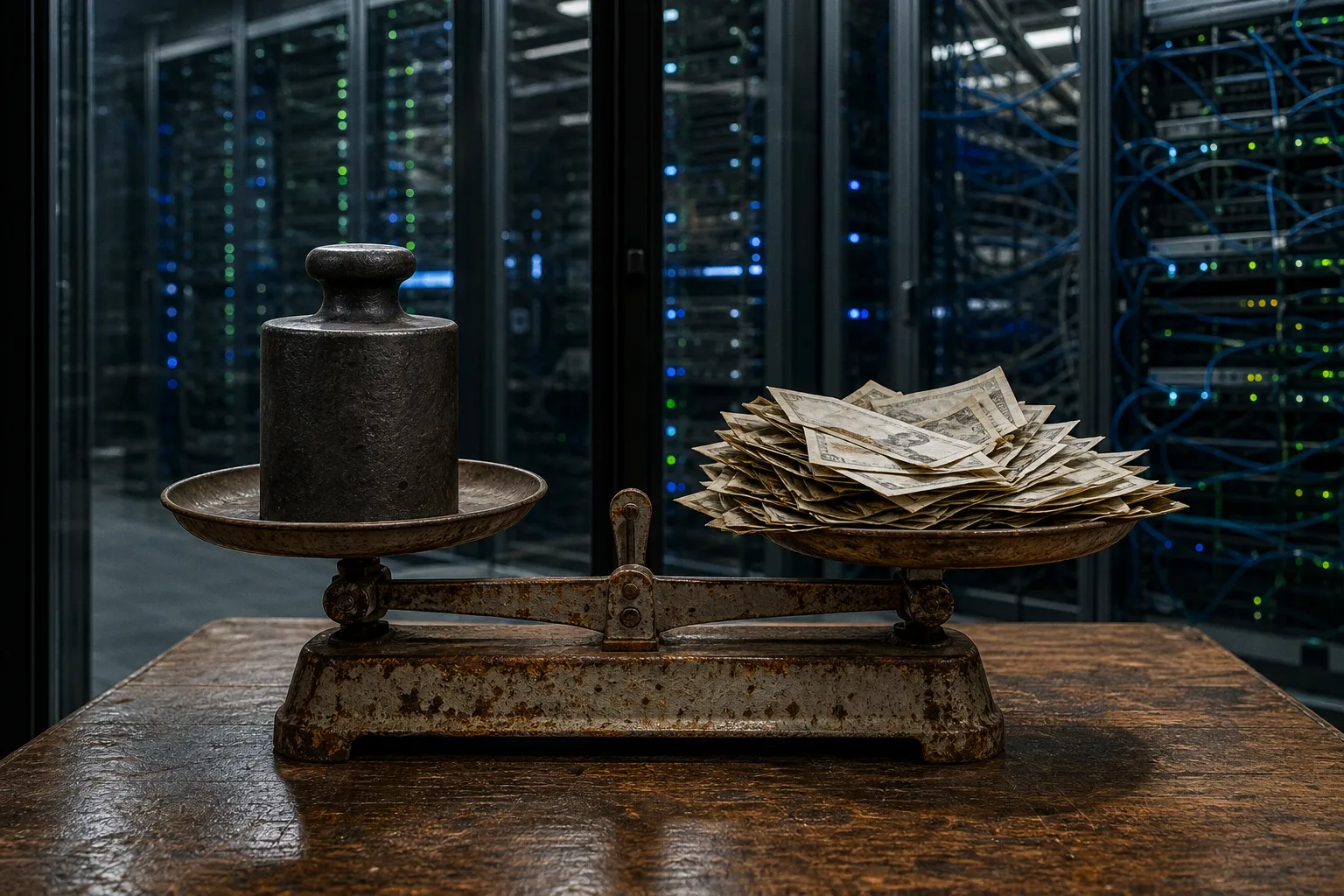
This is the part no Telegram channel puts in its bio. Slippage eats the edge. Latency kills the setup. And when 4,000 other traders receive the same free alert at the same moment, you're not trading an opportunity — you're trading into a queue.
The mechanics of slippage in free signal services
Slippage is the gap between the price you expected to get and the price you actually got. The math is brutally simple:
Slippage cost = (Expected Price − Executed Price) × Position Size
On a standard 0.10 lot EUR/USD trade, that formula punishes you for every tenth of a pip you lose to execution. The retail baseline in volatile sessions runs from 0.5 to 5+ pips per trade. I've measured worse. During NFP releases and FOMC minutes, free-signal entries routinely slipped 3 to 7 pips against the trade direction.
Here's the trap most retail traders miss: a signal with a 55% gross win rate can become a 42% net loser once you account for transaction costs and execution drag. The strategy looks profitable in screenshots. The account tells a different story.
I ran the backtest on my own 90-day log. Before slippage and spread, the free signals had an expectancy of +0.18R. After modeling realistic retail execution (average 1.8 pips slippage on entries, 1.2 on exits, 1.4 pip spread on EUR/USD), the expectancy flipped to −0.31R. The signal provider's win rate didn't change. The market didn't change. The only thing that changed was the honest accounting of what it actually cost to get filled.
A signal that works on paper can fail in the account when the execution model is fiction.
Why herd behavior turns free alerts into losing trades
A free Telegram channel with 10,000 subscribers isn't a community. It's a queue. When the alert hits at 09:31 EST, those 10,000 traders are all staring at the same chart, the same pair, the same suggested entry. Some of them act on it. Many act on it simultaneously.
This creates a measurable phenomenon. The price moves toward the entry level not because the market has independently arrived at a thesis, but because retail flow is being routed into the same order book at the same millisecond. By the time the slower entries execute, the spread has widened, liquidity has thinned, and the original risk-reward is gone.
I watched this in real time on a GBP/USD long signal last March. The alert called for entry at 1.2640. By the time I clicked through to my broker, the ask was 1.2647. Seven pips gone before the trade existed. The signal wasn't wrong about the directional bias — the pair did move higher. I just paid a premium to participate.
This is the herd effect working against retail flow. Professional execution systems have direct market access, smart order routing, and sub-millisecond latency. Free signal users have a phone notification, a human reaction time, and a retail broker's standard order book. The asymmetry is structural. You cannot out-trade it with discipline. The information advantage is already arbitraged away by the time the alert reaches you.
The hidden business model: broker affiliation and churn
Here's the uncomfortable math behind most "free" signal services. The provider doesn't charge you. Someone else does — and that someone is usually the broker paying for your order flow.
Affiliates get paid per lot traded, not per profitable trade. The incentive structure is alignment with broker revenue, not with your P&L. That means the optimal strategy for the affiliate is high trade frequency — what the industry calls churn — regardless of whether those trades have positive expectancy. A signal that triggers 30 trades a month is worth roughly three times as much to the affiliate as a signal triggering 10, even if the lower-frequency signal has a real edge.
I confirmed this pattern in the 90-day log. The free channels I tracked averaged 22 alerts per week. The win rate on those alerts was 38%. A 38% win rate with realistic transaction costs is an account destroyer over 100+ trades. There is no realistic risk-reward distribution that turns 38% winners into profitability on a retail cost structure.
Some free signal channels are educational. Some are run by traders who genuinely want to share setups. The structural problem is that the distribution model — free access, broker-funded — selects for high volume over high quality. The economics reward churn. Your account pays the bill.
Latency and execution: the technical gap between free and pro
Professional trading infrastructure is built around one variable: latency. Institutional execution systems run on co-located servers inside the exchange data center, with round-trip order times under one millisecond. The difference between a fill at 1.2640 and a fill at 1.2647 is often a function of how fast your infrastructure can route the order to the matching engine.
Free signals don't operate in that world. They travel through Telegram, Discord, email, or push notifications. Each layer adds latency. The realistic delay from "signal generated" to "trader clicks buy" runs from several seconds to several minutes, depending on the trader's attention, device, and reaction time.
The market impact of that delay is not theoretical. In fast-moving sessions, a one-second delay can cost 1 to 3 pips of negative slippage. A three-minute delay — which is closer to the average for a free signal — can cost far more when the setup is already moving. You are not entering at the price the analyst saw. You are entering at whatever the order book offers three minutes later.
This is the technical gap that retail traders underestimate. They compare signal quality. They compare win rates. They compare the number of pips the trade is "supposed" to make. They don't compare execution environments, because execution is invisible until the statement arrives.
Calculating the true cost of your 'no-cost' trading strategy
The honest accounting of a free signal service requires four inputs: gross win rate, average winner size, average loser size, and total transaction cost per trade (spread + slippage + commission).
I ran this calculation across my 90-day log:
- Gross win rate: 38%
- Average winner: 22 pips
- Average loser: 14 pips
- Average transaction cost per trade: 3.2 pips (spread + slippage)
Gross expectancy: (0.38 × 22) − (0.62 × 14) = 8.36 − 8.68 = −0.32 pips per trade
Net expectancy after costs: −0.32 − 3.2 = −3.52 pips per trade
That is a negative expectancy system. Every trade has a structural drag of 3.52 pips against the trader before any edge from signal quality is even considered. On 100 trades, that's a 352-pip expected loss — $352 on a 0.10 lot position, $3,520 on a 1.0 lot. The number scales linearly with position size.
The $1,200 I lost wasn't bad luck. It was the math working exactly as designed. A negative expectancy system, traded consistently, produces a negative result. The cost was hidden in execution, not in the headline win rate.
What I actually do now
I still use free signals. I use them differently. The signal is no longer the entry trigger — it's a watchlist filter. When a free alert hits a pair on my pre-defined setup, I run my own confluence check: structure, momentum, session liquidity, and a manual entry with a hard stop at a level the signal provider never specified. If my entry is 6 pips away from the suggested price, I skip. The trade no longer fits my risk parameters.
This is the only honest way to consume free flow. Treat it as a hypothesis generator, not a trade ticket. The provider's analysis is a starting point. The execution, the risk, and the position sizing are mine.
The dream of a free edge is the same dream as a holy grail indicator. It survives because traders want to believe the cost of information is zero. It isn't. The cost is structural, distributed across slippage, latency, herd behavior, and misaligned incentives. You can pay the cost in dollars, or you can pay it in attention and discipline by doing the execution work yourself. The signals that cost nothing always cost something — the only question is whether you're measuring it.